Camera Quality Control
A camera sees every product; AI pulls the bad ones.
AI · 2D / 3D cameras
Checks every product on the line with a camera and lets AI decide: missing cap, low fill, skewed label, crushed pack, surface defects. With 2D smart cameras, 3D cameras or line-scan cameras as the job needs; takes the faulty ones off the line, records why and shows the trend.
Today and after
Today: A visual check is tired by the eighth hour of a shift.
With Camera Quality Control: Every product checked with the same attention.
Today: Defects turn up at the customer.
With Camera Quality Control: Faulty products leave the line by themselves.
Today: Nobody knows when or on which machine they began.
With Camera Quality Control: Defect type and time on record; trends show early.
What it does
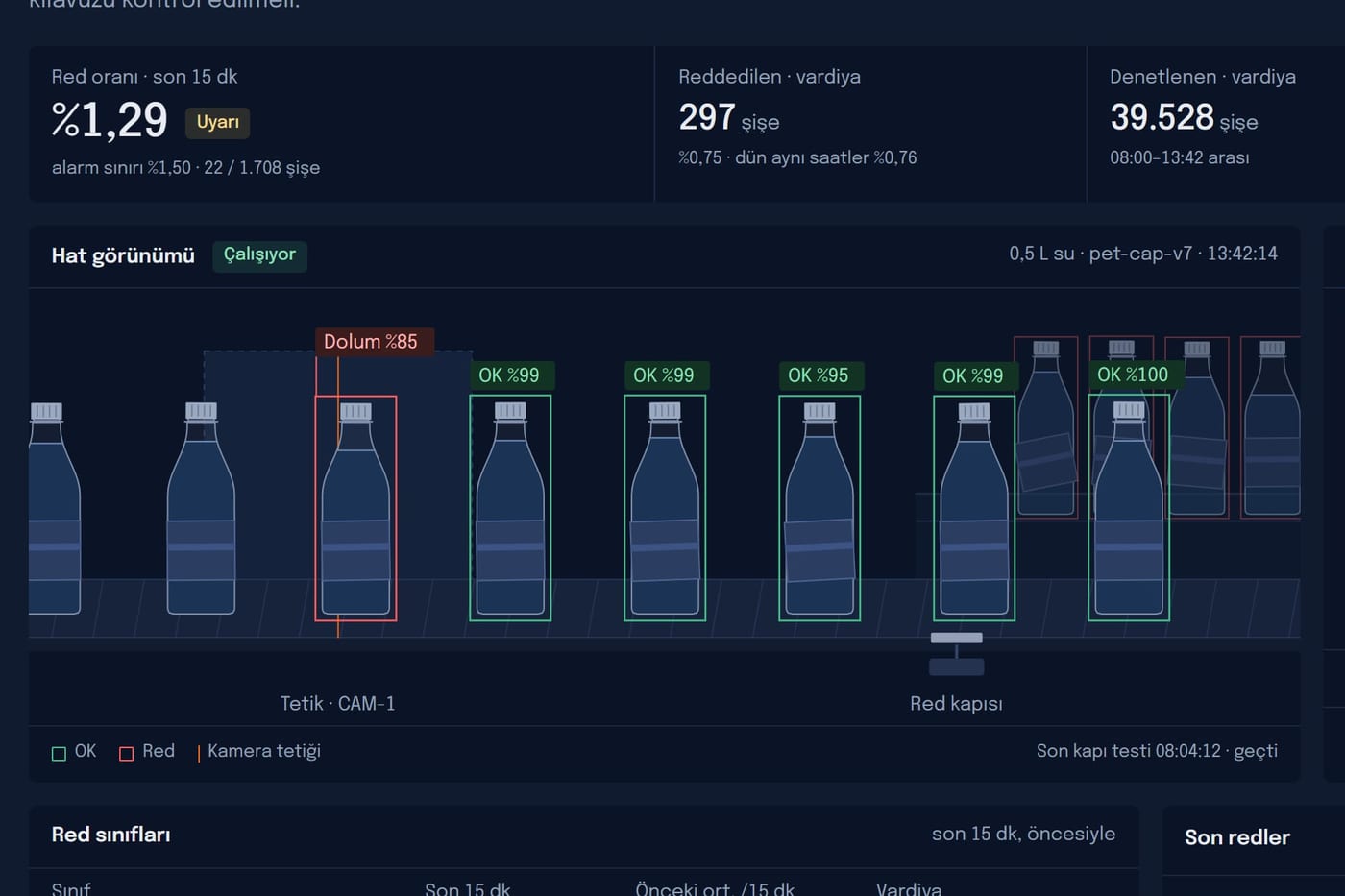
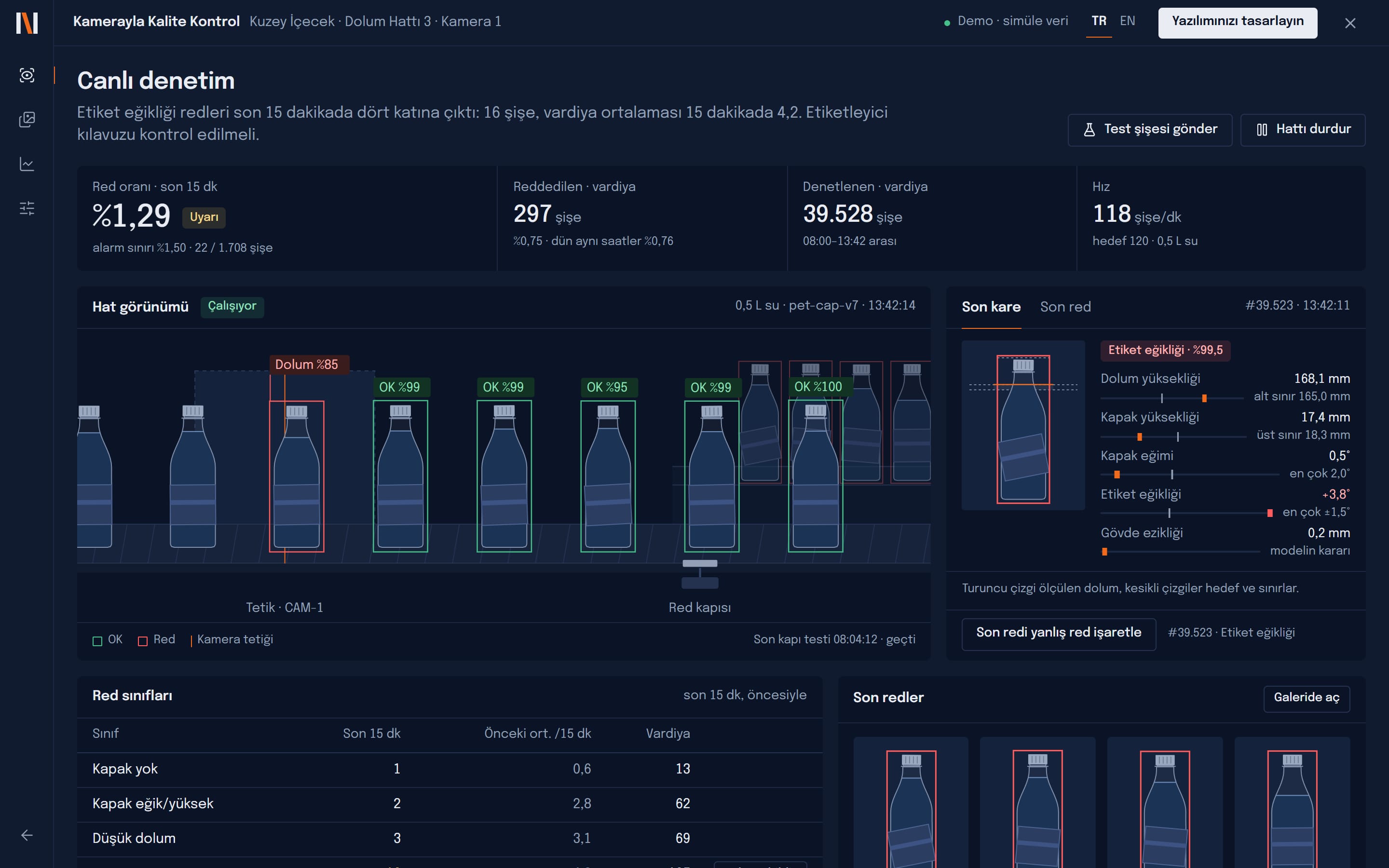
Live inspection
A decision, defect class and confidence for every product; measured fill, cap and label angle.
Reject gate
Reject triggering through the PLC; an image of every rejected product is kept.
Reject gallery
Rejects filtered by class and time; a false reject marked with one tap.
Product recipes
At a product change, tolerances, model and camera settings arrive with one choice.
A model that learns
Operator feedback improves the model on your own samples.
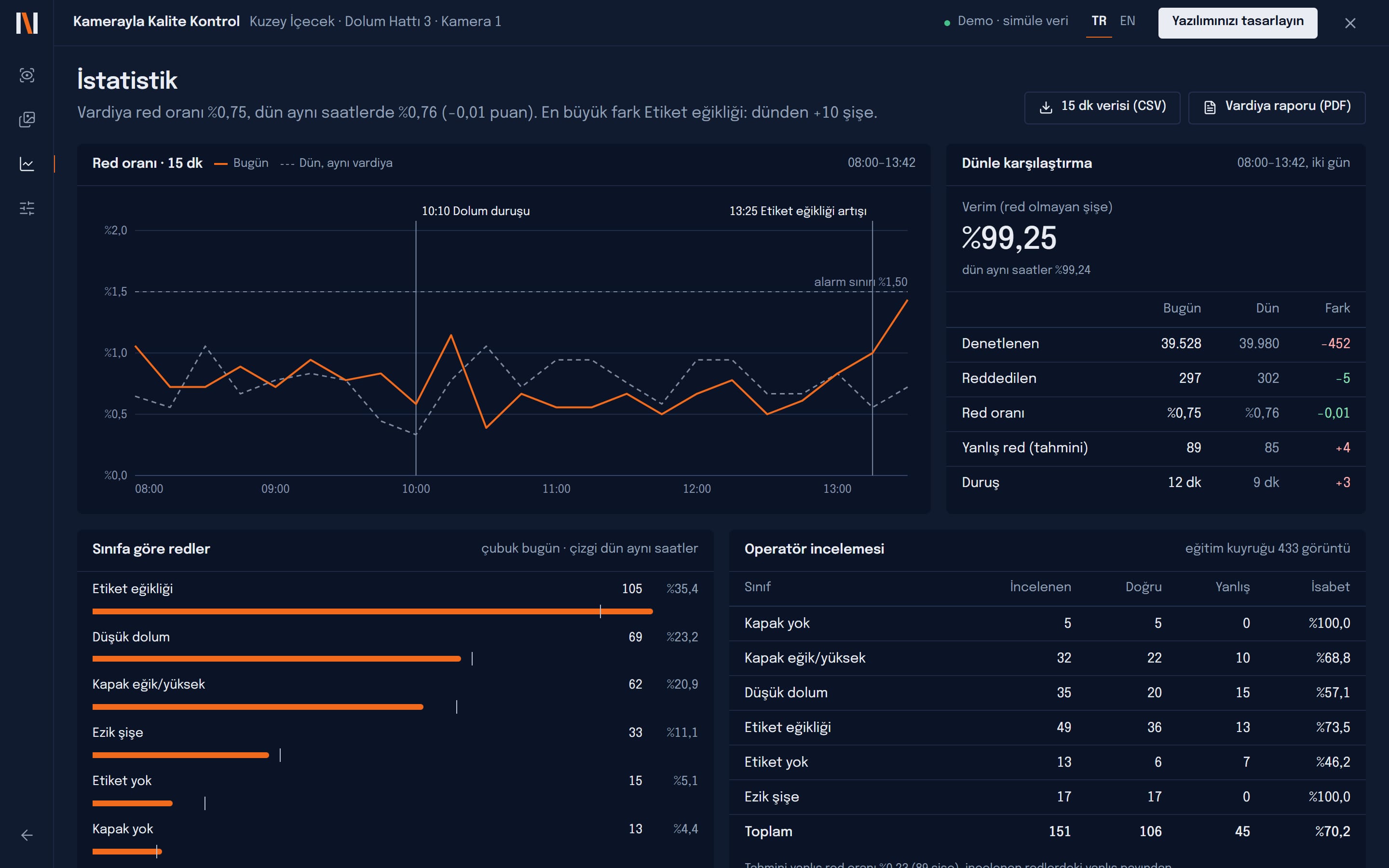
Statistics
Reject rate per hour, split by class, compared with yesterday’s shift.
What it connects to
- AI vision sensor
- 2D / 3D and line-scan cameras
- PLC trigger and reject output
- Profinet / Modbus
- Line screen
- MES / ERP records
Sensors it works with
Platforms this app is part of
A typical project
- Scope
- One station, 1–2 cameras, 4–8 defect classes. Accuracy is measured on your own samples before go-live.
- Duration
- 4–8 weeks from sample collection to commissioning
The demo runs entirely in your browser on simulated data. Let us talk about how it would look on your own line.